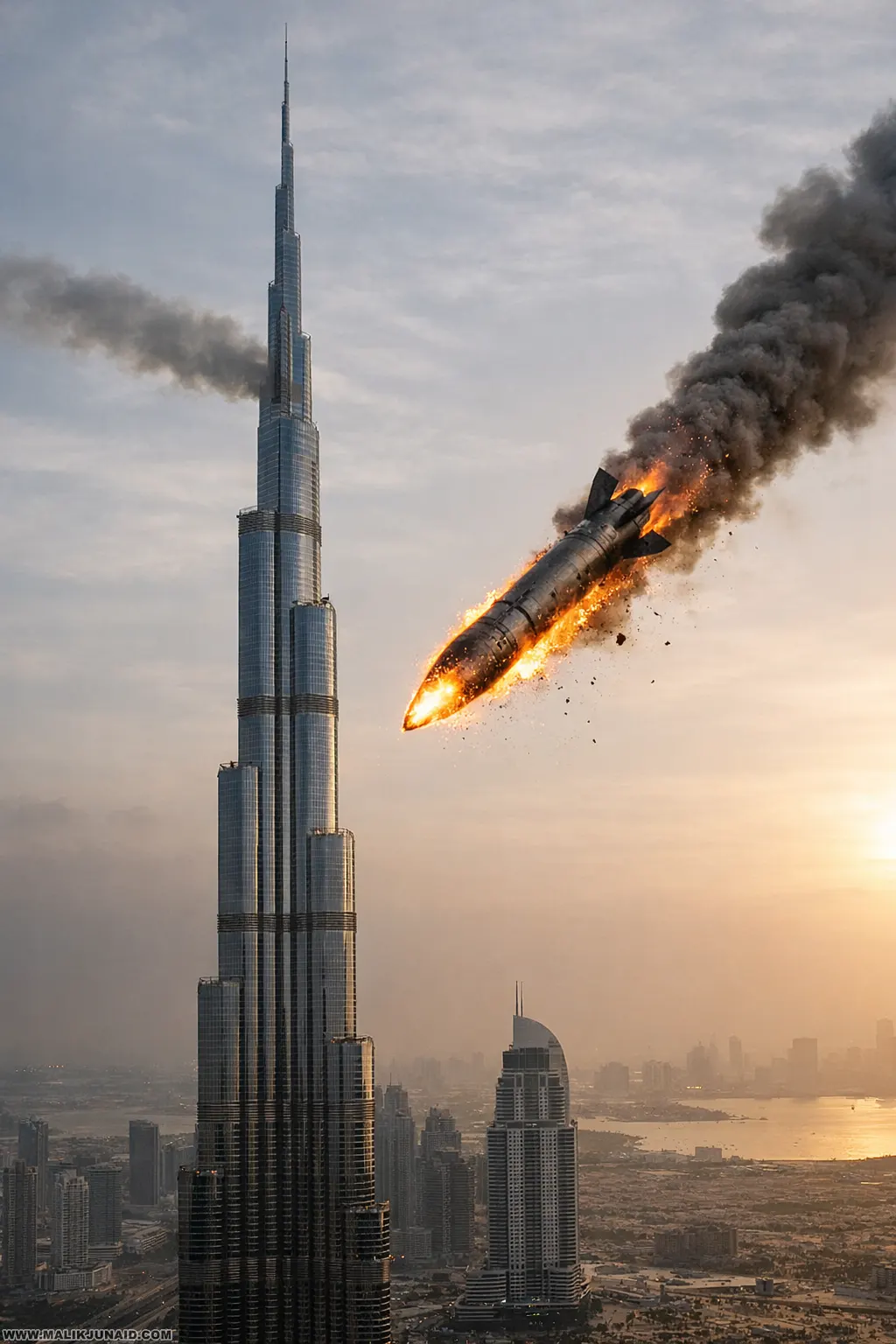
Dubai Real Estate After the Iran Strikes: Boom, Bubble, or Buying Opportunity?
Dubai’s real estate market has been one of the hottest property markets in the world over the past few years. Luxury villas, waterfront apartments, and high-end penthouses have been selling at record prices. Global investors—from celebrities and tech founders to hedge-fund managers—have been pouring money into Dubai property.
But recent geopolitical developments have introduced a new layer of uncertainty.
Following the latest Iran-Gulf military tensions and strikes near the UAE region, investors are beginning to ask a critical question:
Is Dubai real estate still a safe investment, or could geopolitical risks turn the boom into a bubble?
To understand the situation, we need to examine the fundamentals of Dubai’s property market, the risks introduced by regional tensions, and what the future may hold for investors.
Why Dubai Real Estate Has Been Booming
Before analyzing the geopolitical risks, it’s important to understand why Dubai property has been booming in the first place.
Several structural factors have pushed the market upward.
1. Zero Property Tax Environment
Dubai is one of the few global cities where investors benefit from an extremely favorable tax system.
Unlike most countries, Dubai offers:
- No property tax
- No tax on rental income
- No capital gains tax on property sales
For investors, this means significantly higher net returns compared to cities like London, New York, or Singapore.
For example, if an investor sells a property in Dubai for a profit, they keep 100% of the gains, something almost impossible in Western markets.
This tax advantage alone has attracted thousands of global property investors.
2. Strong Capital Appreciation
Another major driver of Dubai’s real estate boom is rising property prices.
Over the last few years, property values in many areas of Dubai have grown between 5% and 8% annually.
This puts Dubai ahead of many major cities.
Average property appreciation comparison:
| City | Average Annual Appreciation |
|---|---|
| Dubai | 5–8% |
| New York | 6% |
| London | 4% |
| Mumbai | 4–5% |
Prime locations such as Palm Jumeirah and Downtown Dubai have seen even stronger growth.
Luxury villas in Palm Jumeirah have in some cases doubled in value within a few years, driven by global demand.
3. High Rental Yields
Dubai also offers some of the highest rental yields among major global property markets.
Rental yield refers to the annual income a property generates compared to its purchase price.
In Dubai, a $1 million property can generate between:
$50,000 to $85,000 per year in rental income.
This is significantly higher than other global cities.
Rental yield comparison:
| City | Rental Yield |
|---|---|
| Dubai | 5–8.5% |
| New York | 4–5.5% |
| London | 3–4.5% |
| Mumbai | 2.5–3.5% |
Combined with the zero-tax system, Dubai’s rental returns are among the most attractive in the world.
4. Dubai as a Global Wealth Hub
Dubai has transformed itself into a global hub for business, tourism, and wealth migration.
Several global trends have helped drive property demand:
- Remote work culture
- Wealth migration from Europe and Asia
- High-net-worth individuals relocating
- Crypto entrepreneurs and tech founders moving to Dubai
The UAE’s Golden Visa program, which grants long-term residency to investors and entrepreneurs, has also boosted property demand.
For wealthy individuals seeking tax advantages and lifestyle benefits, Dubai has become a preferred destination.
The Iran Strikes and Rising Geopolitical Concerns
Despite the strong fundamentals of Dubai’s real estate market, the recent Iran-Gulf tensions and strikes targeting parts of the region have raised new questions among investors.
The Middle East has always been a geopolitically sensitive region. While Dubai has historically been considered one of the safest cities in the Middle East, the recent escalation has reminded investors that regional tensions can have global consequences.
Missile and drone activity near the Gulf region triggered temporary disruptions in airspace and raised security alerts.
Although the UAE’s defense systems intercepted most threats and major infrastructure remained intact, the psychological impact on investors cannot be ignored.
Real estate markets are highly dependent on investor confidence, and geopolitical shocks can quickly change investment sentiment.
How Geopolitical Risks Affect Property Markets
Real estate markets do not operate in isolation. They are closely linked to global economic stability and political security.
When geopolitical tensions rise, several things can happen:
Investor Confidence Weakens
Foreign investors may delay property purchases until the situation becomes clearer.
Tourism Can Slow Down
Dubai’s economy relies heavily on tourism and hospitality. Any decline in international visitors can affect rental demand.
Capital Flows May Shift
Global investors could redirect capital to markets perceived as safer.
Insurance and Financing Costs Rise
Higher risk perceptions may lead to increased insurance costs and stricter financing conditions.
These factors can slow down a booming property market.
Is Dubai Facing an Oversupply Problem?
Another concern often discussed by analysts is oversupply.
Oversupply occurs when developers build too many properties relative to demand.
Dubai has historically experienced cycles of rapid construction during boom periods.
If supply grows faster than population and demand, prices may eventually correct.
History provides important lessons.
During the 2008 global financial crisis, Dubai’s property market experienced a major crash, with prices falling nearly 50% in some areas.
However, the market later recovered and introduced stronger regulations to prevent similar bubbles.
Demand vs Housing Supply
Despite these concerns, current data suggests that Dubai still has strong demand for housing.
One indicator used by analysts is the residents per housing unit ratio.
Dubai’s ratio is approximately 2.7 residents per housing unit, indicating healthy demand.
For comparison:
| City | Residents per Unit |
|---|---|
| Dubai | 2.7 |
| New York | 2.55 |
| London | 2.3 |
| Mumbai | 4.5–5 |
Dubai continues to attract expatriates, entrepreneurs, and investors, supporting housing demand.
Housing Absorption Rate
Another important metric is the housing absorption rate, which measures how quickly new properties are sold or rented.
Dubai’s absorption rate is around 89%, which is considered very strong.
Luxury properties have an even higher rate—up to 95%, meaning many units are sold before construction is completed.
This suggests that despite concerns, demand remains robust.
Types of Dubai Real Estate Investments
Dubai’s property market offers opportunities across several segments.
Ultra-Luxury Market
Ultra-luxury properties are located in areas such as:
- Palm Jumeirah
- Emirates Hills
- Downtown Dubai
Prices typically start at $2 million and can exceed $50 million.
These properties are often purchased by billionaires and global elites seeking status and prestige.
Rental yields are lower here, typically 5–7%, but appreciation can be significant.
High-End Luxury Properties
These properties range between $800,000 and $2.7 million.
They attract wealthy professionals and international investors.
Rental yields typically range between 6% and 8%.
Mid-Range Investment Properties
Mid-range properties are often the most attractive for investors seeking balance between appreciation and rental income.
Popular locations include:
- Jumeirah Village Circle (JVC)
- Dubai Hills Estate
- Dubai Creek Harbour
- Town Square
Prices range between $300,000 and $800,000.
Affordable Housing
Affordable housing units are priced below $270,000 and are located in areas such as:
- International City
- Dubai South
- Dubai Land
These properties often generate 8–9% rental yields, making them attractive for passive income investors.
Risks Foreign Investors Must Understand
While Dubai property offers opportunities, foreign investors should also understand the risks.
Financing Challenges
Many foreign investors must make large upfront payments because mortgage access can be limited.
Global Economic Dependence
Dubai’s economy is closely tied to global capital flows.
If major economies slow down, property demand may decline.
Tax Obligations in Home Countries
Even though Dubai offers zero taxes, investors may still have tax obligations in their home countries.
Rental income and capital gains may be taxable elsewhere.
So… Is Dubai Real Estate a Bubble?
The answer is not simple.
Dubai real estate has strong fundamentals:
- High rental yields
- Favorable tax policies
- Strong international demand
- Growing population
However, risks exist:
- Geopolitical tensions
- Possible oversupply
- Dependence on global capital flows
Real estate markets always move in cycles.
Dubai may continue growing, but price corrections are always possible.
Final Thoughts
Dubai’s real estate market remains one of the most attractive property markets globally.
Its combination of high rental yields, tax advantages, and global demand makes it a compelling investment destination.
However, the recent geopolitical tensions in the region serve as a reminder that even strong markets are not immune to external shocks.
For investors, the key is careful research and long-term thinking.
Those who invest strategically in the right locations may benefit from Dubai’s continued growth.
But investors who blindly follow hype may find themselves exposed if the market corrects.
In real estate—as in all investments—knowledge and timing matter more than excitement.

Recent Posts

Dubai Real Estate After the Iran Strikes: Boom, Bubble, or Buying Opportunity?
Dubai Property Market War Impact and Effect on Pakistani Real Estate Investments from Expats
All Categories
- 1 Kanal Balloted Plot for Sale – Overseas Central Sector C, Capital Smart City
- 1 Kanal Plot for Sale in Capital Smart City Phase 1 — Overseas Prime-1 Sector H (Access Road 1)
- 1 Kanal Plot in Capital Smart City Phase 1 – Overseas Prime 1 Block
- 1 Kanal plot in Overseas Prime 1
- 10 Marla 6-bedroom house for sale located in Capital Smart City – Overseas East Block C
- 10 Marla Plot for Sale Capital Smart City Islamabad Sector A Overseas East Block
- 10 Marla Plot for Sale in Executive West – Capital Smart City
- 10 Marla Villa for Sale – Capital Smart City Phase 1 (Overseas East)
- 2 Kanal Plot for Sale in Capital Smart City Overseas Prime 1
- 4 marla commercial plot for sale in Capital Smart City Overseas Central – Sector A
- 5 Marla Executive west G Block Plots for Sale in Capital Smart City phase 2
- 5 Marla Plot for Sale in Capital Smart City – Overseas East | Sector E
- 5 Marla Plot for Sale in Capital Smart City | Overseas East E Sector
- 5 Marla Plot in Executive 1 Sector C
- 5 Marla plot in Overseas East, Sector H, Street 6 Capital Smart City Phase 1
- 5 marla Residential Plot for Sale in Capital Smart City – Overseas West
- 7 Marla Corner Plot in Overseas Prime Block E – Fully Paid Prime Location Zero Dues!
- 7 Marla Plot for Sale – Capital Smart City Phase 1 Executive Block B
- 7 Marla Villa in Capital Smart City Overseas East Sector E
- 8 Marla Commercial Plot for Sale – Capital Smart City Overseas East phase 1
- blue world city
- Blue World City Islamabad: Navigating Installment Demands without NOC Approvals
- Capital Smart City – Executive Block (Phase 1): In‑Depth Guide to 5‑Marla Plots in Sectors B & C
- Capital Smart City – Overseas Central (Harmony Park) Sector H, Plot #36 | 3.5 Marla Fully Paid & Possession Ready
- Capital Smart City – Overseas East (Sectors E, F, G)development status
- Capital Smart City 14th August 2025 – A Grand Jashn-e-Azadi Celebration
- Capital Smart City 5 Marla House | Step-by-Step Construction Guide | Part 1: Taking Possession
- capital smart city executive sector b
- capital smart city interchange
- Capital Smart City Islamabad
- Capital Smart City Islamabad Construction bylaws Malik Junaid Gains Real Estate
- Capital Smart City Overseas Central Sectors E & B drone walkthrough 2025
- Capital Smart City Overseas East – Complete Guide, Updates, and Investment Insights
- Capital Smart City Overseas East | Sectors E, F & G
- Capital Smart City Overseas East drone update 2025
- Capital Smart City Overseas East plot for sale
- Capital Smart City Overseas East Sectors A, K, J, B – Complete Tour & Plot Guide 2025
- Capital Smart City Payment Update & Limited-Time Discounts (Aug–Sept 2025): What Every Member Should Know
- Capital Smart City Phase 1 full overview
- Capital Smart City Phase 3 – Pre-Launch Residential Plots with Exclusive Discounted Payment Plan (4.5 Years Installments)
- Capital Smart City Phase 3 Booking
- Capital Smart City Phase 3 Launching Soon: Location, Prices & Investment Potential
- Capital Smart City Phase 3 NOC
- Capital Smart City Phase 3 vs Faisal Town Phase 2
- Capital Smart City Villa Apartments — FDH Special Relief & Escalation Discount Details (Sept 2025)
- CDA Sector I-16 Islamabad
- Chahan Dam La Mer District Capital Smart City
- Chahan Dam views in Capital Smart City (CSC)
- Commercial for sale in Capital Smart City Executive West
- complete society 4k drone view
- CSC NOTIFICATIONS
- DHA Gandhara (DHA Phase 9 Islamabad) Drone Tour 4K | Location, Access & Latest Update
- DHA Phase 5 Islamabad
- Dha Phase 5 Islamabad Plot Prices
- Downtown Commercials in Capital Smart City
- Drone Footage of Capital Smart City Pakistan – Overseas East (Sector C)
- Drone Video Capital Smart City Overseas East Block
- Dubai Property Market War Impact and Effect on Pakistani Real Estate Investments
- Executive 1 Block C Capital Smart City Islamabad
- Executive 1 Sector B – Capital Smart City Phase 1
- Executive 1 Sector B villas Capital Smart City drone tour
- Executive Sector B Capital Smart City Phase 1
- Executive West Capital Smart City Phase 2 2025
- Executive West Development | Capital Smart City Phase 2 (September 2025)
- Explore E-18 & D-18 Islamabad – Gulshan-e-Sehat & Engineering Cooperative Housing Societies
- Faisal Town Islamabad
- Faisal Town Phase 2 Analysis: FIRs, NAB Inquiry, Land Issues & Investor Risks Explained
- Faisal Town Phase 2 master plan
- Faisal Town Phase 2 Price Revision Expected
- Faisal Town Phase 2 Sector 0
- Faisal Town Phase 2 Sector O booking available
- Faisal Town Phase 2 Sector O development
- Faisal Town Phase 2 Sector O: Plots, Prices & Guide
- Faisal Town Phase 2 Sports City 2, Sector I & J, Education District development update
- FOR SALE – COMMERCIAL PLOT (CAPITAL SMART CITY)
- full society visit
- Ghauri Town Phase 7 Encroachment Operation
- I-14, I-15, I-16 Islamabad
- i16 sector cda islamabad
- Introducing DHA Gandhara Phase 9 Islamabad’s Next Landmark Destination
- Latest Plots for Sale in Capital Smart City Islamabad June 2025 Update
- New Booking for Overseas Central – Ready to Construct Residential Plots
- notifications
- Overseas Central Sector A B Capital Smart City 2025
- Overseas Central Sector A Big Roundabout Capital Smart City
- Overseas Central Sector E & F drone video
- Overseas Central Sector G Capital Smart City 2025
- Overseas Central Sectors A & B Capital Smart City drone reveal
- Overseas East Ring Road & Access Roads to Overseas Prime – A Game-Changer in Connectivity (Sept 2025)
- Overseas East Sector H Capital Smart City drone 2025
- Overseas Prime 2 Capital Smart City Phase 2 2025
- Overseas Prime Sector H Capital Smart City
- Overseas Prime Sectors D E F Capital Smart City
- Park View City Islamabad
- Plot for sale Block B Executive 1 Street 3 Plot 17 Capital Smart City
- Plot for sale in Street No.06, Sector D (Overseas Prime) | Capital Smart City
- plots for sale in Capital Smart City Phase 2 – Overseas West.
- Prime-1 to Overseas East road Capital Smart City
- Rawalpindi Ring Road, RRR,
- Realtors Enclave & 400-ft Main Boulevard | Capital Smart City (Overseas Central) — 2025
- Restaurant
- Sector E Overseas Central Capital Smart City location
- Sector E, Overseas East: 5 Marla Plot for Sale
- Sector H Land Cutting Revealed! | Capital Smart City Overseas Prime Islamabad Progress
- Silicon District Capital Smart City development update 2025
- Soil Testing Map Designing and Modern Construction Solutions in Capital Smart City by Gains Real Estate
- sports facilities Capital Smart City property guide
- Top City Islamabad
- Uncategorized
- University Town Islamabad
- University Town Islamabad development
- University Town Islamabad Office Sealed – What It Means for Plot Owners & Investors
- University Town Islamabad Sector F, Sector D & Commercial Area – Development Update & Investment Guide
- villas
- War Situation in UAE & Its Impact on Pakistan Property Market – Investor Analysis
- When Will Life Truly Begin in Capital Smart City Islamabad?
- Where Faisal Town Phase 2 meets Capital Smart City (Thalian Interchange, M-2 & RRR corridor)
- 🏡 12 Marla Corner Residential Plot for Sale in Capital Smart City – Overseas Central (Sector A)
Tags
Get Free Consultations
About your file or plot already purchased and what you want to do with it, get a free advice....